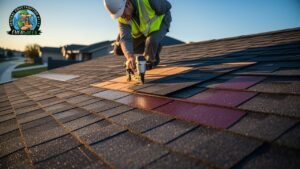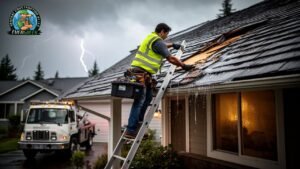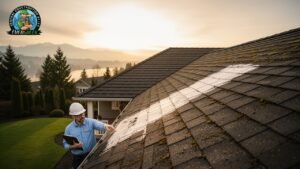
Most asphalt shingle roofs last somewhere between 20 and 30 years, though a basic three tab roof usually falls closer to 15 to 20. Age alone isn’t what decides when to replace an asphalt shingle roof. Condition is.
Roof failure also isn’t a minor line item for insurers: the Insurance Institute for Business and Home Safety attributes 70 to 90 percent of total weather related property losses to roof damage, which is part of why an adjuster looks at the roof first on almost any wind or hail claim.
Homeowners calling around for asphalt shingle roofing services are usually trying to answer a simpler question: is this still a repair, or has it become a replacement? That’s the same call the crew at Evergreen General Construction #1 LLC fields on nearly every roof inspection, and the answer comes down to five or six specific things a roofer checks, not the number on the permit.
Cost Variation by Shingle Type
How many years do asphalt shingles last depends on the asphalt shingle roof types and grade installed, not just the brand printed on the wrapper. Manufacturer ratings assume a lab test though, not your attic, so the realistic number is usually a few years short of the warranty. Manufacturer ratings assume a lab test though, not your attic, so the realistic number is usually a few years short of the warranty.
| Shingle Type | Manufacturer Rating | Realistic Lifespan | Notes |
|---|---|---|---|
| Three tab | 20 to 25 years | 15 to 20 years | Lightest and most affordable, weakest wind resistance |
| Architectural (dimensional) | 25 to 30 years | 20 to 25 years | Most common choice on replacements today |
| Premium / designer | 30 to 40 years | 25 to 35 years | Heavier, multiple laminated layers |
Ventilation is the biggest reason real world lifespan falls short of the rating. Trapped attic heat bakes the underside of shingles from below at the same time the sun is working on them from above. The U.S. Department of Energy’s building science research on attic ventilation notes that lowering roof deck temperatures through proper venting can meaningfully lengthen a shingle roof’s service life, while poor ventilation works against it year round.
That’s a detail most homeowners never think about until a roofer points out there’s no soffit intake behind the ridge vent that was installed years ago.
What Signs Mean It’s Time to Replace, Not Repair?
Curling, heavy granule loss, and decking sag are the three signs an asphalt shingle roof needs replacement, and each one points to a different stage of failure.
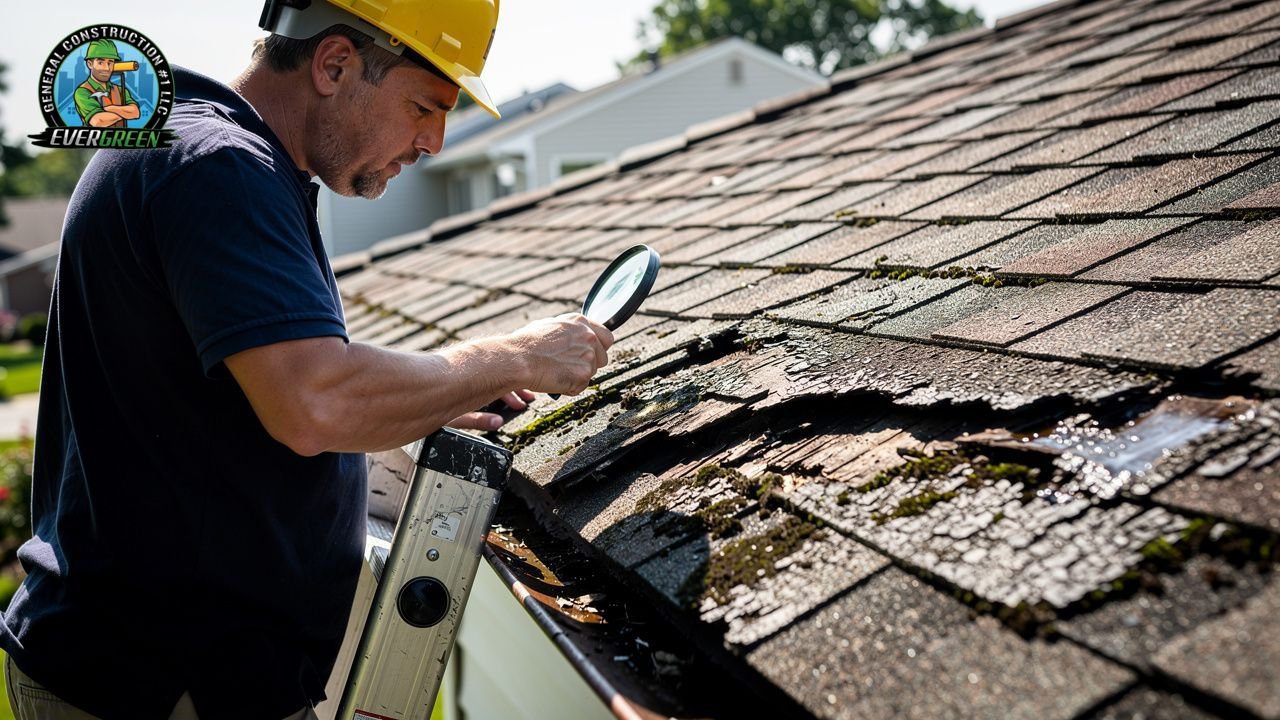
- Curling or clawing shingles. When edges are lifting up (cupping), it typically indicates that there is moisture underneath. If the bulge in the middle occurs with flat edges (clawing) then this is typically just a lack of UV life. Either way, once shingles curl, they stop sealing to each other, and wind gets under the whole field instead of one tab.
- Heavy granule loss. After a heavy rain, a few granules will be in the gutter, which is normal wear and tear. Asphalt mats exposed by bald patches on the shingle face or by gutters that fill-up with large chunks of gravel after storms of rain mean they are subject to the direct effects of sunlight.
- Occasional cracked or missing shingles, not localized around a pointy element like a flashing.
- Visible sagging on the roof plane itself, not the gutter line. That’s a decking problem, not a shingle problem, and it means water has been getting in for a while.
- Daylight through the roof boards when you’re standing in the attic with the lights off.
One or two of these on their own, especially curling on the side of the roof that takes the most sun, often means a repair still makes sense. Three or more together, especially with any decking sag, is where asphalt shingle roof replacement signs stop being optional.
How to Check Your Own Roof Before Calling Anyone
- Walk across the street on a clear day and look at the roofline for sagging or uneven planes. You’ll see it better from a distance than standing under it.
- Check the gutters after the next real rain. More than a light dusting of granules is worth noting, and where it’s concentrated matters, since valleys shed the most water and wear fastest.
- Go into the attic on a sunny afternoon with the lights off. Any pinpoints of daylight through the decking mark a leak path.
- Check ceilings and top floor closets for brown rings, especially near chimneys, skylights, and valleys where two roof planes meet.
- Photograph anything you find, with a date. Roofers and insurance adjusters both want a timeline, not just a description.
That checklist is really how to tell if asphalt shingles are worn out without ever getting on a ladder.
When It Stops Being a Do It Yourself Problem
Soft decking near a valley, active dripping during rain, or shingles that fall apart in your hand all mean it’s time to call in asphalt shingle roofing services instead of patching further. A second or third layer of old roofing underneath also limits repair options and may already be at the legal layer limit in your area.
Factors Affecting Asphalt Shingle Roof Lifespan
There are three areas a walk around the yard will never detect, but will be detected by a professional inspection: a failing seal strip, misdriven nails, and flashing behind caulk. A peeling seal strip means the sun broke down the adhesive, and wind will find that spot next.
Nails driven too high or at an angle back out over time and cause early failure. Caulk over old flashing is not a real fix. Ask any asphalt shingle roofing services provider to check all three before you trust a roof is sound.
The One Thing You Can Safely Fix Yourself
The one job that most homeowners can safely do from a ladder is to clear debris from the valleys and lower courses. Moisture is trapped in leaves and pine needles accelerating granule loss in valleys much faster than in any other location of the roof. A hose and a leaf blower twice a year, in spring and after leaf fall, is the cheapest protection available.
If you’re planning to sell soon, roof age matters too. HUD requires at least two years of remaining service life on a roof before an FHA backed loan can close, so an aging roof can stall a sale before it even leaks.
Frequently asked questions
Does homeowners insurance cover an old roof?
Usually not. Insurance is not for gradual wear and tear, it only will cover sudden damage caused by events such as wind or hail. Typically, adjusters would reject claims for curling and granule loss, which are indicative of normal aging.
Is it OK if I install shingles on only one side of the roof?
It is possible, but splitting the warranty over two installation dates and showing as a patch because of color fading.
How long does a full roof replacement take?
One to three days for a typical single family home. Steep pitches, extra tear off layers, or decking work add time.
Do I need a permit to replace asphalt shingles?
In most areas, yes. Expect the contractor to pull it under their own license, not hand that job to you.
What is the difference between flashing repairs and replacement?
Flashing repair repairs a leak without touching the shingle field; the leak is located at a chimney, vent, skylight or valley. It is effective if the shingles remain intact.
Should he/she spend more for architectural shingles or three tab?
For most homeowners staying past ten years, yes. The added cost is modest next to five to ten extra years of life and a stronger wind rating.
When to call
A roof that’s curling in more than one spot, sagging anywhere on the plane, or losing granules faster than a light dusting after storms is past the point where a patch buys you much time
Evergreen General Construction #1 LLC inspects roofs and can tell you plainly whether you’re looking at a repair or asphalt shingle roof replacement, with no pressure either way. Call (208) 695-3167 or email 1evergreengc@gmail.com.
Sources
HUD HOC Reference Guide, Roofs & Attics — confirms the two year remaining roof life requirement and the three layer re-roofing limit for FHA backed loans.
NAIC, A Consumer’s Guide to Home Insurance — backs the distinction between sudden, covered peril damage and gradual wear that standard homeowners policies exclude.