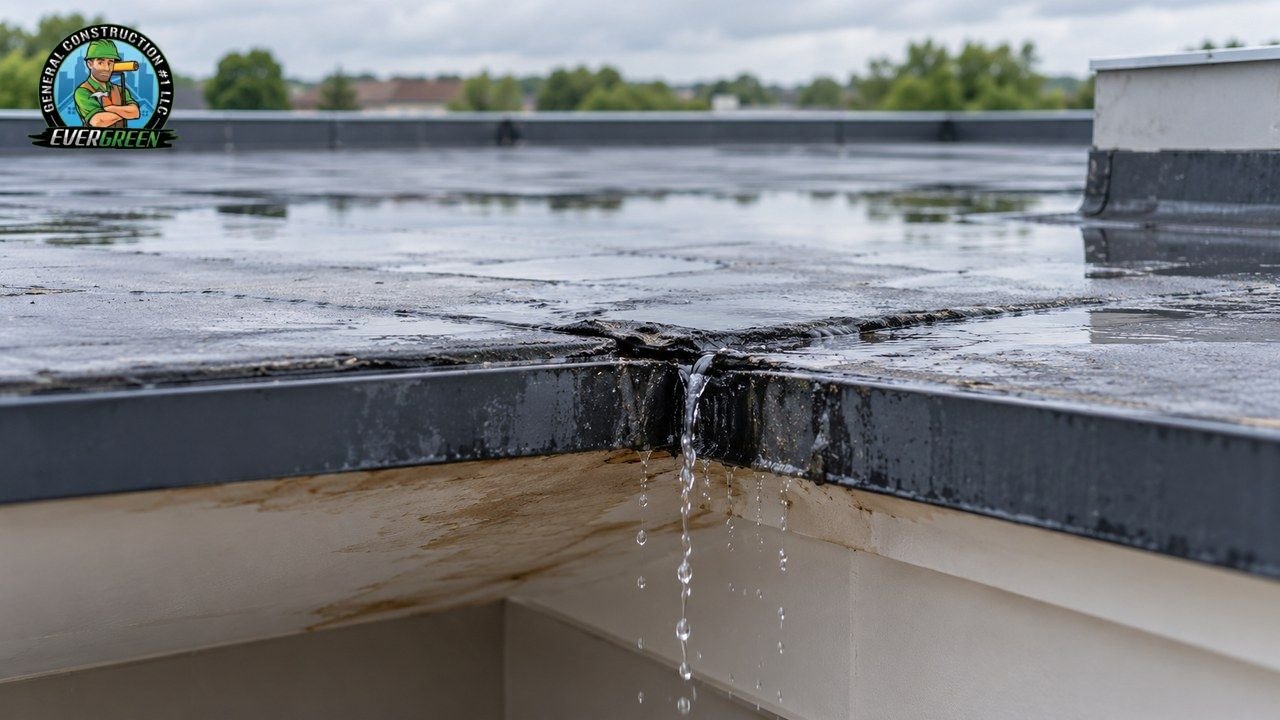
Flat roof leaks start when water is on the roof surface for longer than the membrane can stand. Seams open and flashing gets loose and puddles melt away allowing water to get in. The Idaho Department of Insurance estimates that even one inch of water in the home can result in $25000 in property damage.
Key Takeaways
- Most leaks are due to standing water.
- Water will leak in through broken scars and cracked penetrations.
- Mold can grow in 48 hours in wet detachment and drywall.
- A small patch done early costs far less than a new roof.
Why Do Flat Roofs Leak? The Drainage Problem Behind Most Failures
Flat roofs leak more than sloped roofs because water stays on the surface far longer. Every low spot gives it time to find a weak seam. Boise design rules call for a 25 psf minimum roof snow load and a 1 inch per hour rainfall rate in its adopted building criteria. A heavy melt or a summer cloudburst can load a flat roof fast.
Most flat roofs have only a slight slope. A roof built a little off level holds a puddle for days. That puddle softens adhesives and strains the seams around it. Sunlight adds to the damage. Strong UV at Idaho elevations dries out the membrane. Freezing nights then make it brittle.
Flat Roof Leak Causes Ranked by How Often They Appear
Most frequent flat roof leak causes are ponding water failed seams and damaged flashing. Each of them is further exacerbated by clogged drains and age. This is the list in the order that we see them.
Ponding water
Water left for more than 48 hours erodes the membrane. It also makes the deck heavier than it was designed to be and for a prolonged period of time.
Failed seams
As the roof expands and contracts the seams that are welded or glued are raised. Water seeps under edge and runs out.
Damaged flashing
Metal or membrane edges at walls and vents get separated. Sealant becomes brittle and cracks.
Blocked drains and scuppers
Outlets are blocked by leaves and dust as well as wildfire ash. The water rises up and goes to the nearest weak spot.
Punctures
Foot traffic and fallen branches and dropped tools cut small holes. A tiny cut can soak insulation for months.
Old age
Membranes turn brittle after 15 to 30 years relying on the material. Cracks follow.
Poor installation
Shallow holes at corners and penetrations appear in 1 or 2 seasons.
Common Flat Roof Problems and What They Look Like
Common flat roof problems manifest themselves as ceiling stains and standing water and membrane bubbles. The early detection of them prevents a small patch from becoming a replacement.
| Problem | What You See | Urgency |
|---|---|---|
| Ponding | Puddles that last past 48 hours | Medium |
| Lifted seam | Curled edge or visible gap | High |
| Blister | Soft raised bubble | Medium |
| Cracked flashing | Gaps at walls and vents | High |
| Wet insulation | Spongy spots underfoot | High |
| Ceiling stain | Brown ring inside | Urgent |
| Clogged drain | Debris at the outlet | Medium |
How Roofers Find the Source of a Leak
A roofer is able to locate a leak by identifying the source of the water stain and testing each possible source area. The drip point is not usually the “entry point”.
- Look up for the dampest area in the ceiling and attic.
- Inspect the closest seams, flashing, and drains on the roof by walking the roof..
- Test water, one area at a time, under controlled conditions.
- Record the location of the damage and take a picture of it prior to any repair work.
Flat Roof Water Damage Inside Your Building
Flat roof water damage permeates through the roof surface and into the insulation and drywall and wiring. The earlier you turn off the source the lower the bill will be. EPA recommends water cleanup be conducted in 24 to 48 hours to minimize mold growth. Additionally wet insulation inhibits insulation. That increases heating and cooling costs.
Watch for these signs inside:
- Yellow or brown ceiling stains
- Peeling paint or bubbling drywall
- A musty smell after rain
- Sagging ceiling tiles
- Higher energy bills with no clear reason
| Tip 1: Trace the edge of any stain with a pencil and write the date beside it. If the ring grows after rain you have an active leak. |
How to Prevent Flat Roof Leaks Before the Next Storm
Prevent flat roof leaks with these six habits. Keep water moving off the roof and fix small damage fast.
- Clean drains and scuppers in the spring and fall.
- Clear away debris and ash following windy weeks and during fire season.
- Inspect roof after storms for ponding and lifted seams.
- Reduce the amount of foot traffic on walk pads.
- Replace flashing and penetrations on a periodic basis.
- Every year, hire a professional to inspect.
| Pro Tip: Take photos of the roof at the same locations each season. Side by side photos reveal slow sagging and new ponding that you would miss on a single visit. |
Flat Roof Maintenance Schedule for Idaho Seasons
Good flat roof maintenance takes four short tours a year. Each season has one job that matters more.
Spring
Check for freeze damage and broken seams after the thaw.
For summer
Check for UV wear and blisters before peak storm season.
Fall
Take away leaves from drains and cut branches that overhang the roof.
Winter
Do not allow drains to freeze. Skip using metal tools to fragment ice.
Flat Roof Repair Options From Quick Patches to Full Replacement
Flat roof repair depends on how far the damage extends. Small punches required a repair. Soaked insulation or widespread cracking needs a bigger fix.
| Option | Best For | Limit |
|---|---|---|
| Patch or sealant | Small punctures | Cannot fix wet insulation |
| Seam repair | Lifted or split seams | Needs clean dry edges |
| Flashing replacement | Leaks at walls and vents | Needs sound membrane nearby |
| Roof coating | Aging but dry membrane | Cannot cure a soaked deck |
| Section replacement | Localized wet insulation | Must tie into old seams |
| Full replacement | Failing or very old roof | Highest upfront cost |
| TIP 2: Request photos from your roofing company of before and after roof repair work. They safeguard the warranty and support an insurance claim. |
What to Ask a Roofer Before the Repair Starts
Ask for the leak source and the repair scope in writing. A good roofer can show you where the water entered and why.
- Which material is on my roof and does the patch match it?
- Is the insulation under the leak wet?
- Will you photograph the work before and after?
- Does the repair affect my existing warranty?
- Are you licensed and insured in Idaho?
Clear answers mean fewer surprises. Vague answers usually mean a patch that fails by the next storm.
Local Climate Factors Other Roofing Guides Skip
Idaho weather creates a leak pattern that guides from other regions miss. The high desert swings from hot days to freezing nights and flat roof leaks often start in that swing.
-
Daily temperature swings
Membranes expand by day and shrink by night. Seams take the strain.
-
Spring snowmelt
Fast melt sends water to drains that may still hold ice.
-
Summer thunderstorms
Short heavy bursts test every drain at once.
-
Wildfire ash and cottonwood fluff
Both clog scuppers quickly.
-
Code snow load
Boise requires roofs to carry at least 25 psf. Check your own city before changing any structure.
Flat Roof Leak Questions Answered by Local Roofers
What are the most common causes of flat roof leaks?
Leaks are most common in ponding water and seams and damaged flashing. Each of them is worsened by clogged drains and old age.
How many years should a flat roof last?
The lifespan of a flat roof relies on the roofing material and maintenance and is normally 15 to 30 years. However, single ply membranes commonly hit the ceiling when they are constantly maintained.
Why does my roof leak sometimes and not others?
Leaks only occur when water reaches the weak point. It rains lightly and it is draining. When the water is heavy or ponding or wind blows through the gap is pushed open.
Does insurance cover flat roof leaks?
Sudden storm damage is typically covered by insurance. It will not address wear or neglect unless you choose to spend extra money on them.By the Idaho Department of Insurance most homeowners insurance policies do not cover flood damage. Take photos of the harm and contact your insurance company for repairs and cleanup.
Where do flat roofs leak most?
The areas where flat roofs leak most are seams and flashing, drains and penetrations. These are the points of contact between two materials or where water collects.
Why does my flat roof leak in heavy rain?
Rain causes a lot of water to pour down the drains and water accumulates on the roof. That water is able to penetrate to seams and flashing that remain dry during light rains. Dirty drains make it a lot worse.
How much does it cost to fix a leak in a flat roof?
A seam or patch repair is normally a couple hundred dollars. Costs for larger repairs that involve wet insulation can be in the thousands of dollars. First check & quote by roofer.
Stop Flat Roof Leaks Before They Spread
Evergreen General Construction #1 LLC brings more than 25 years of experience to leaking roofs. Our crew finds the source and explains your options in plain terms. We stop flat roof leaks before they spread.
Call (208) 695 3167 or email 1evergreengc@gmail.com to schedule an inspection.
Sources
- Idaho Department of Insurance: Flood Awareness Month release (one inch of water can cause up to 25 thousand dollars in damage and standard homeowners policies exclude flood)
- City of Boise: Currently Adopted Building Codes (25 psf minimum roof snow load and 1 inch per hour rainfall rate)
- U.S. EPA: Mold Remediation in Schools and Commercial Buildings Chapter 4 (dry clean water damage within 24 to 48 hours)